
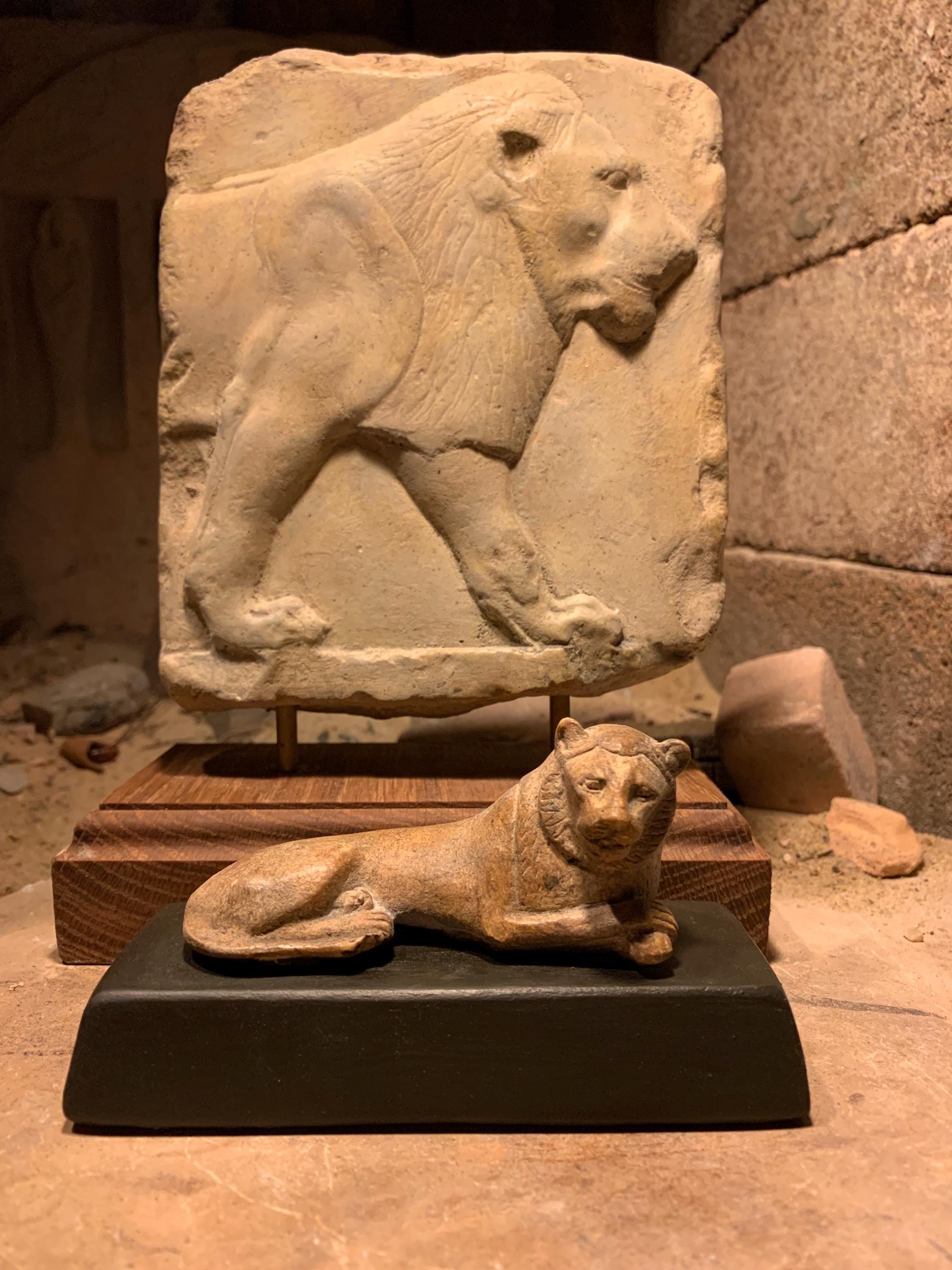
The Lion in Egyptian art
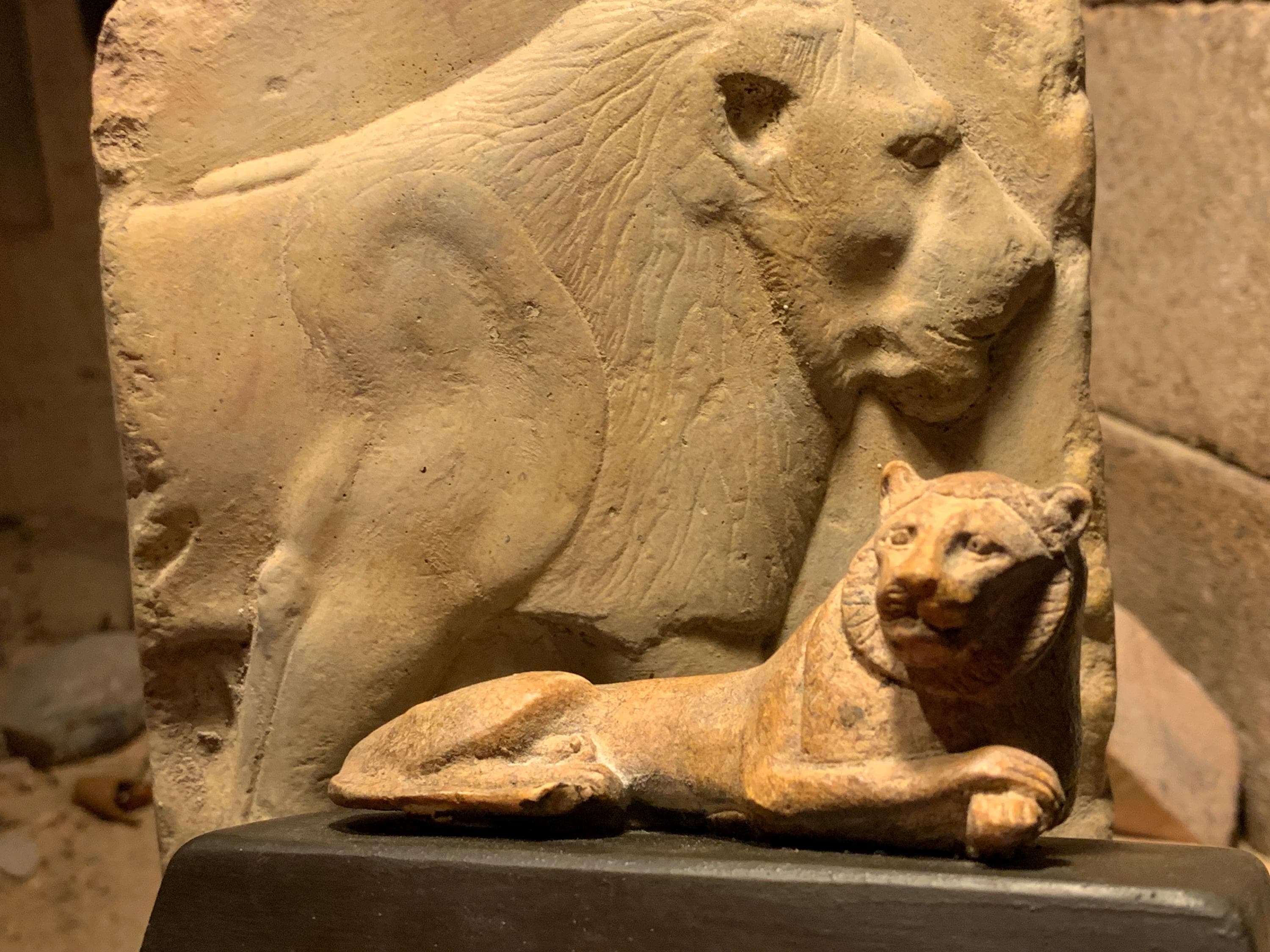
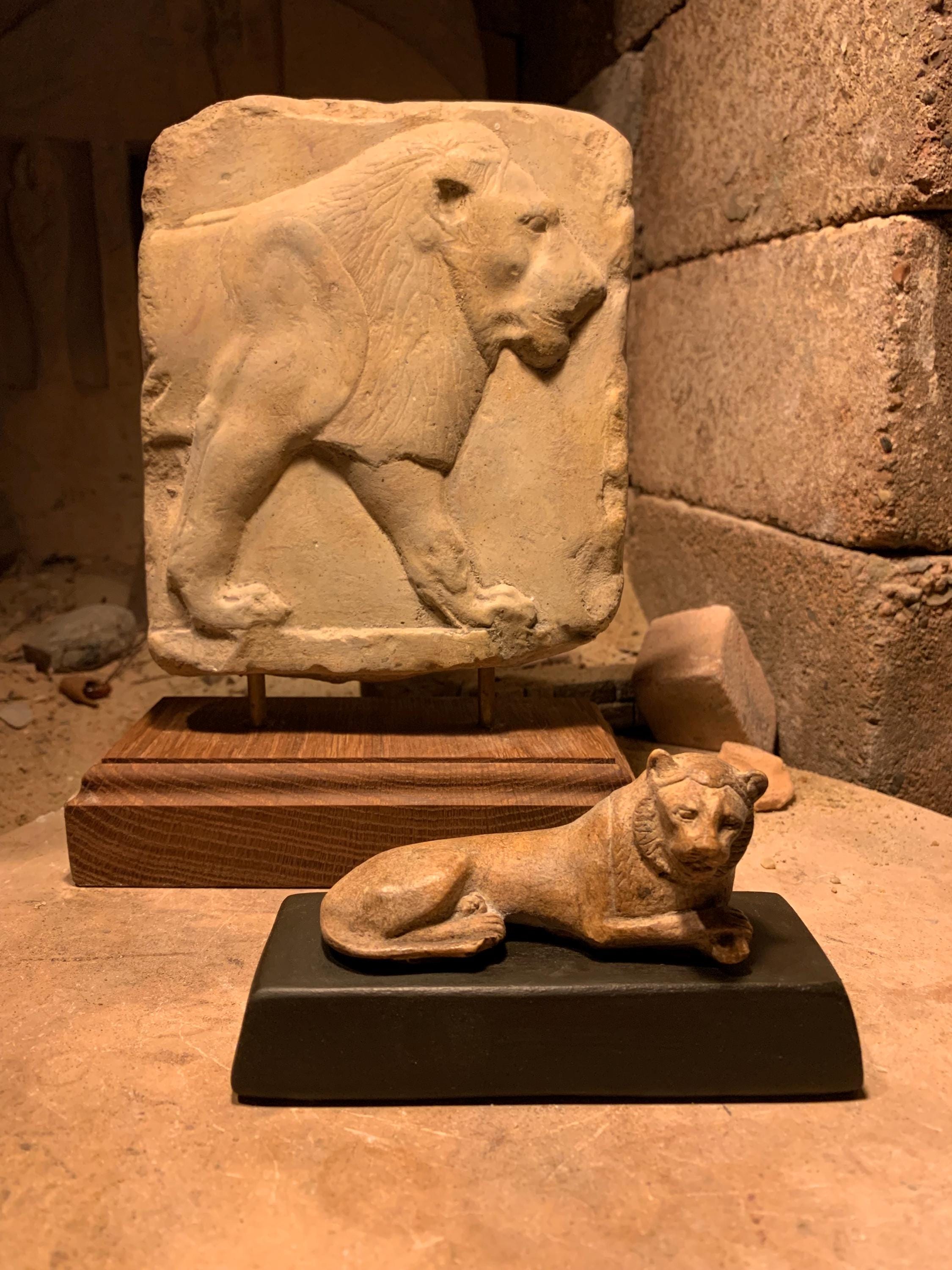
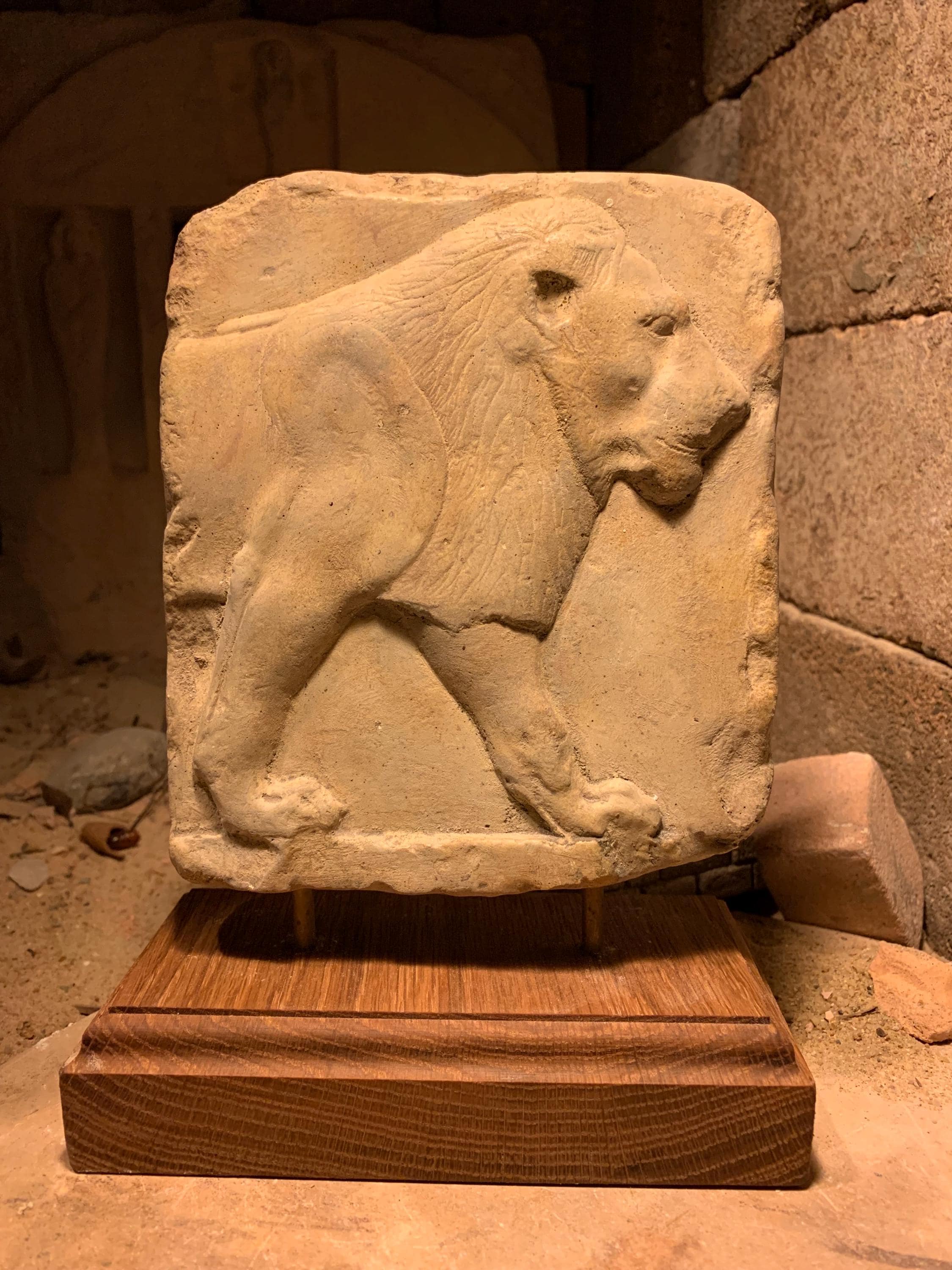
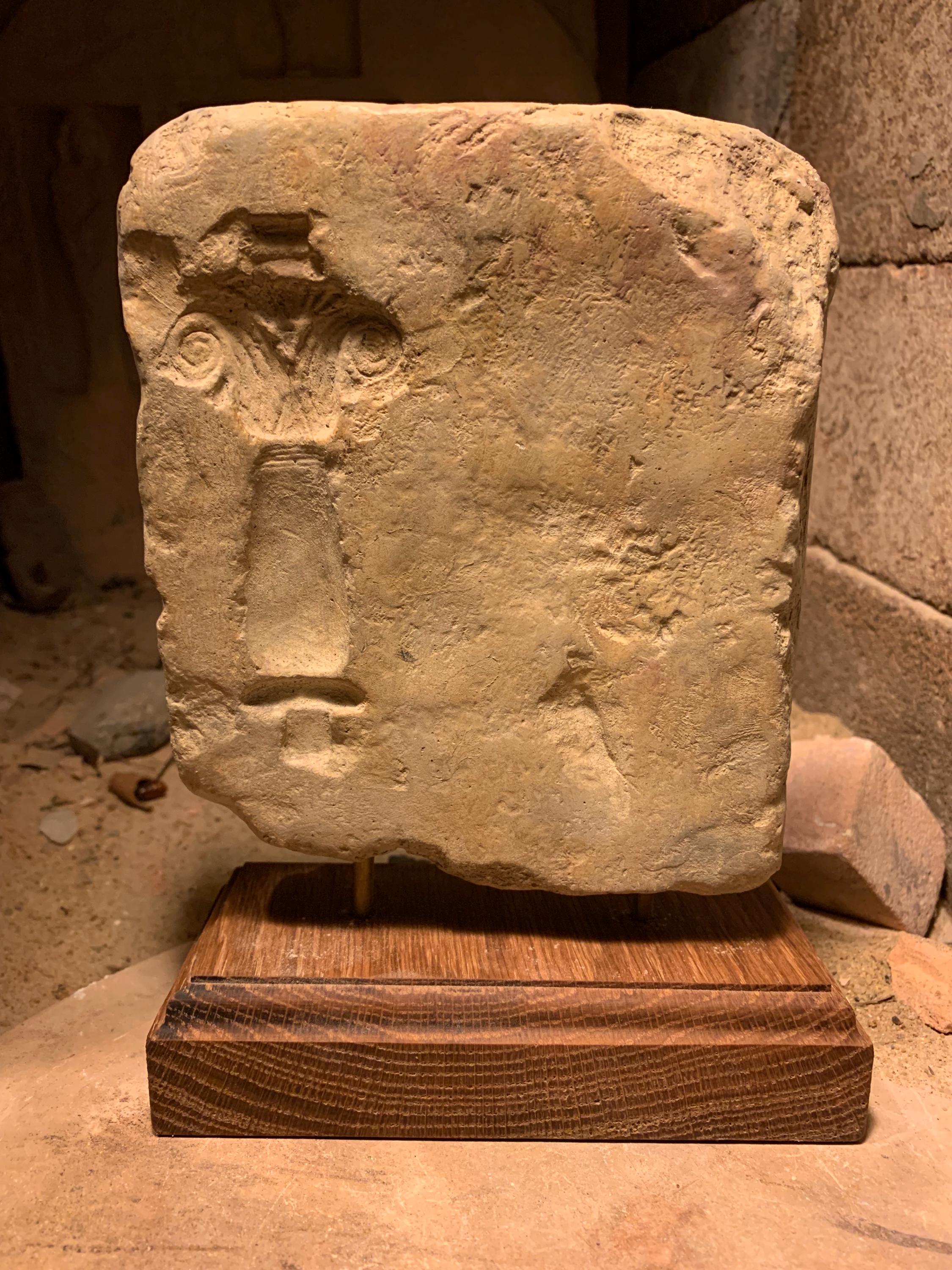
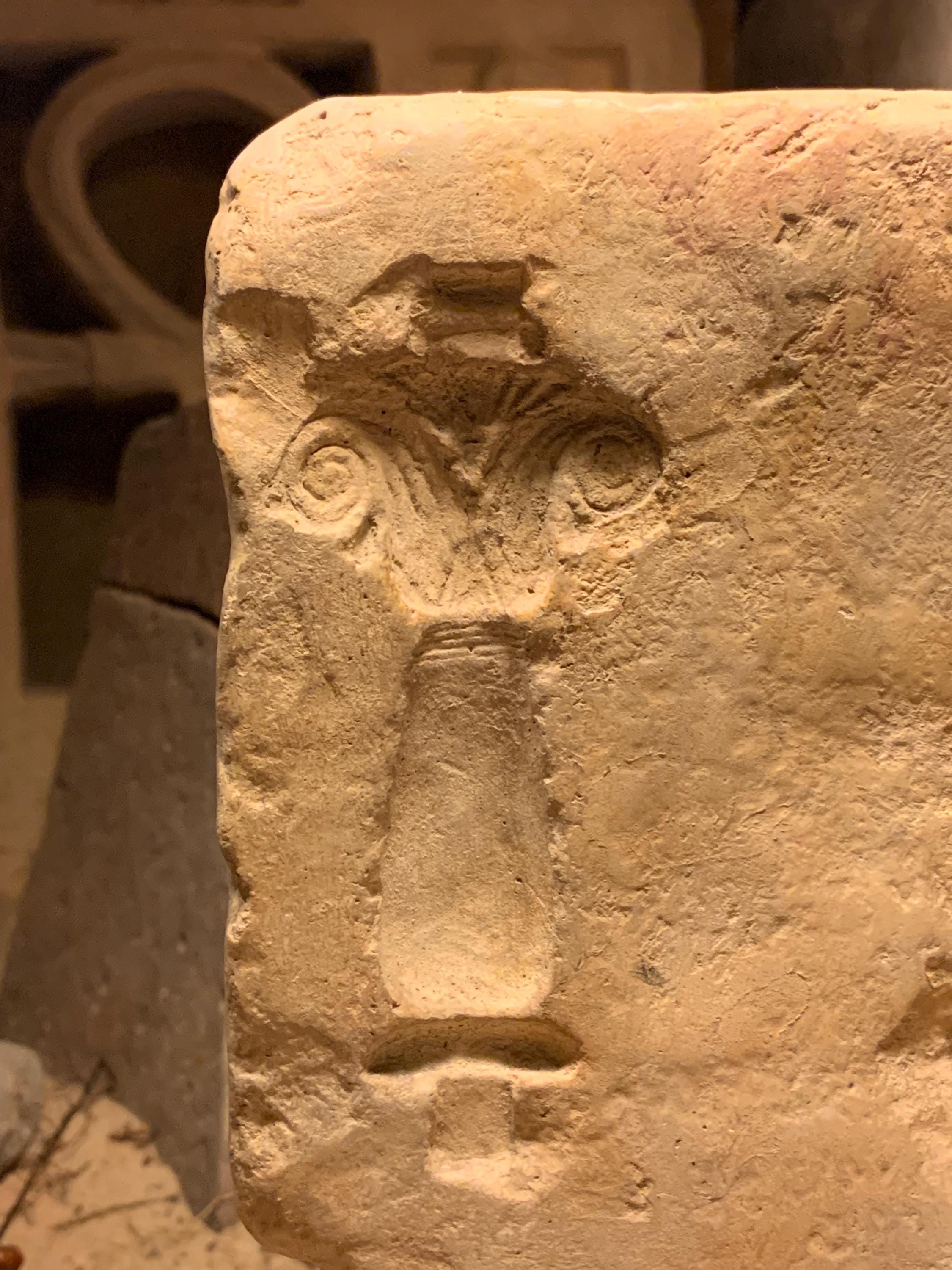
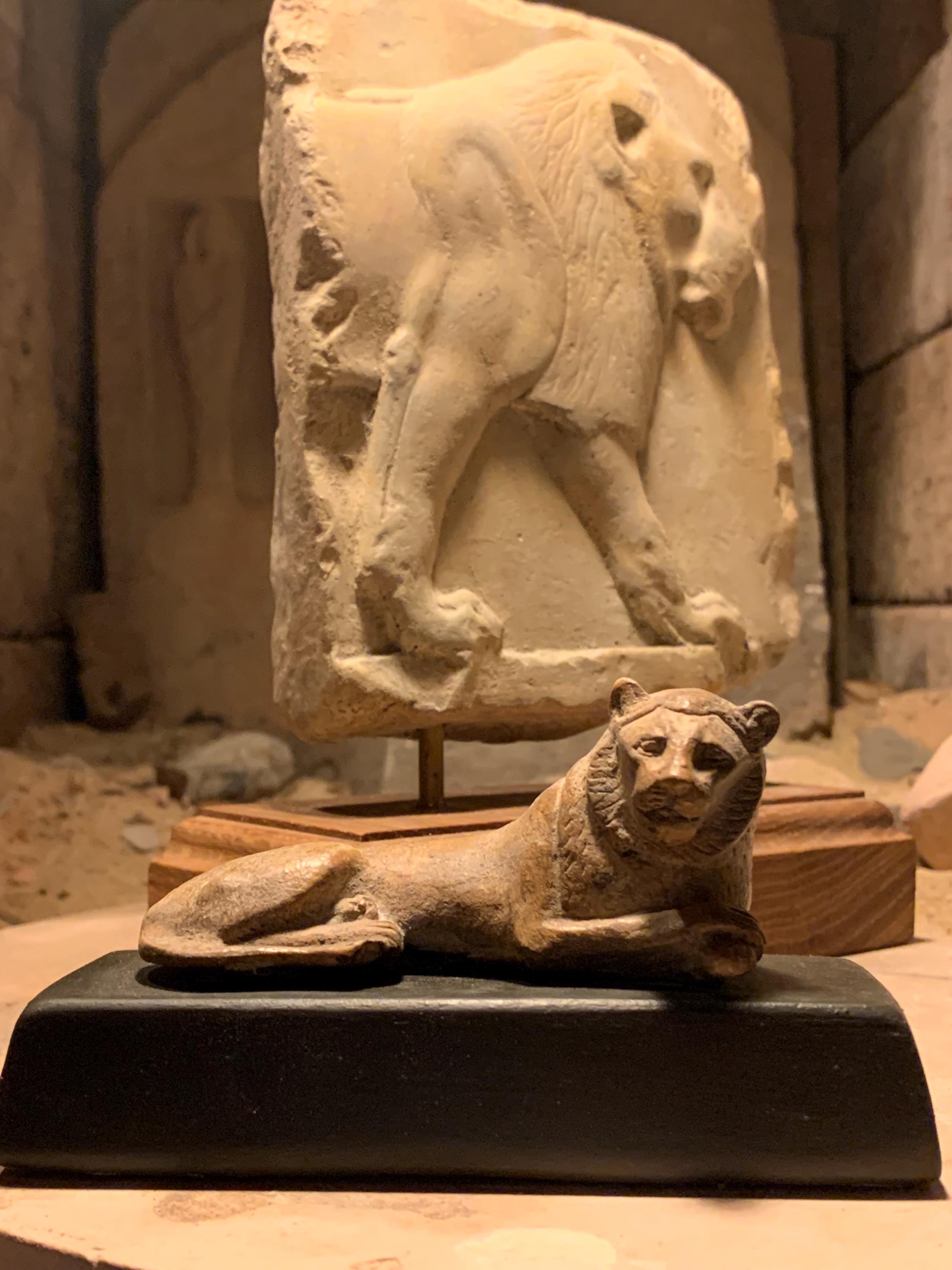
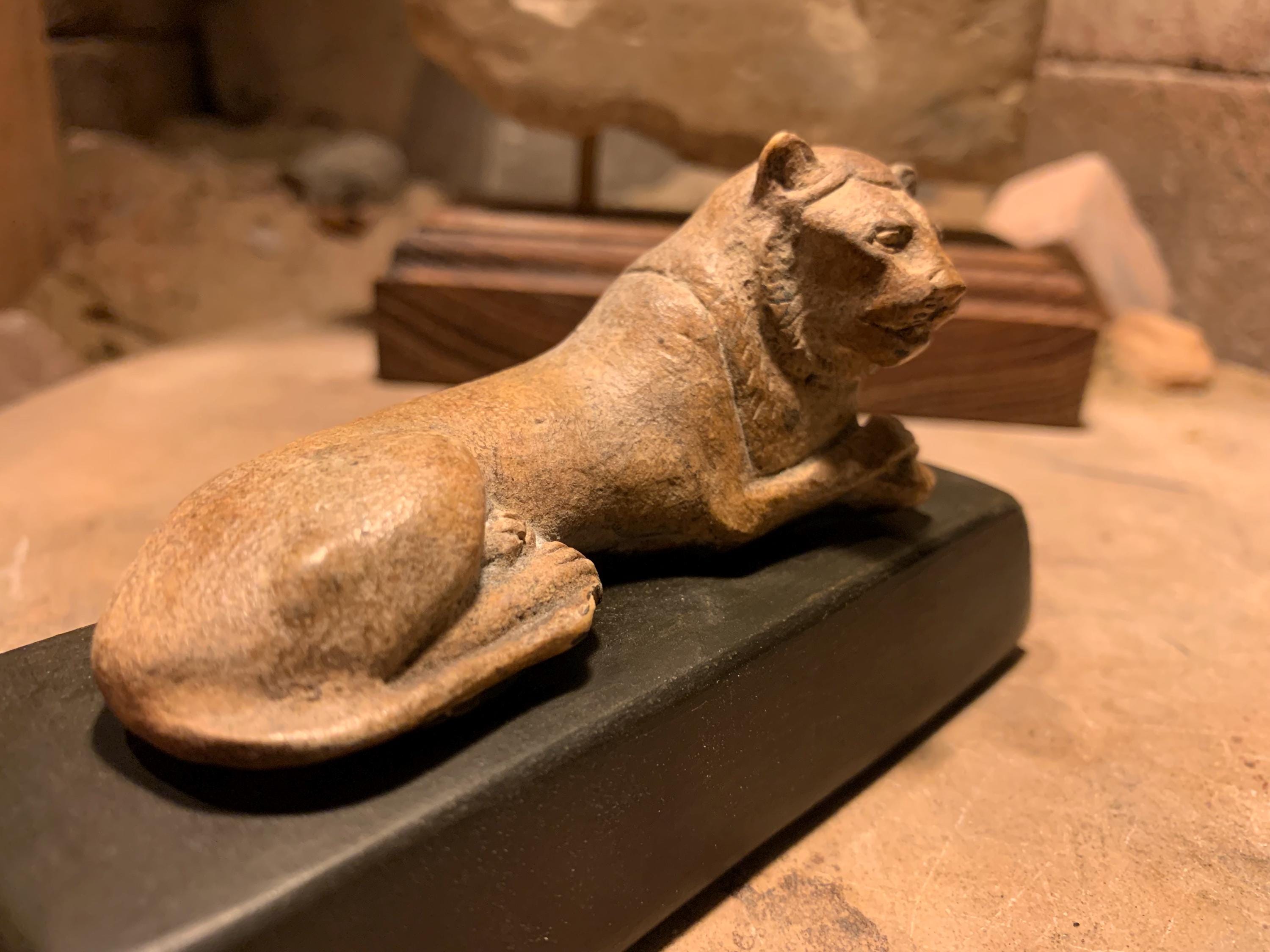
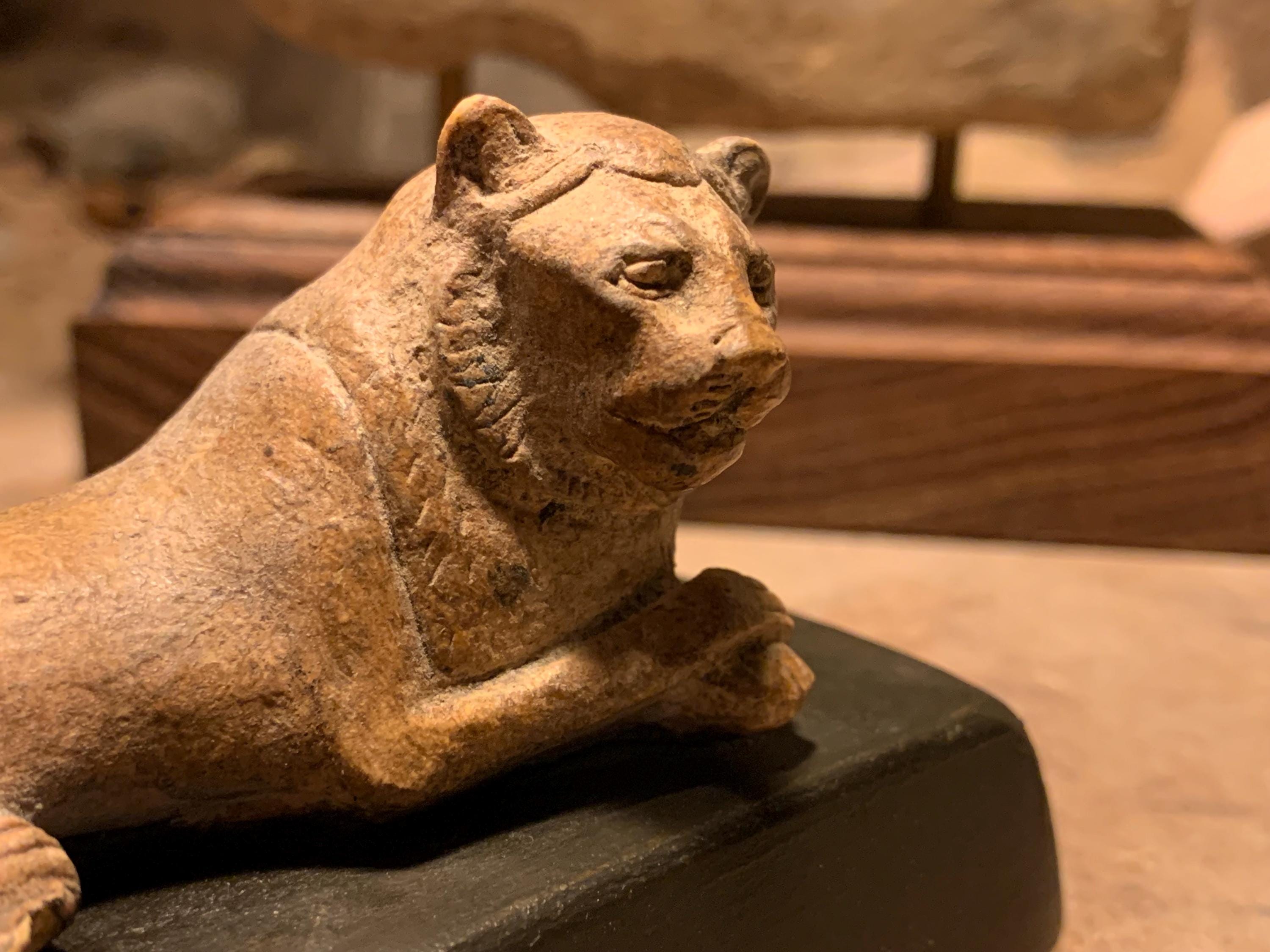
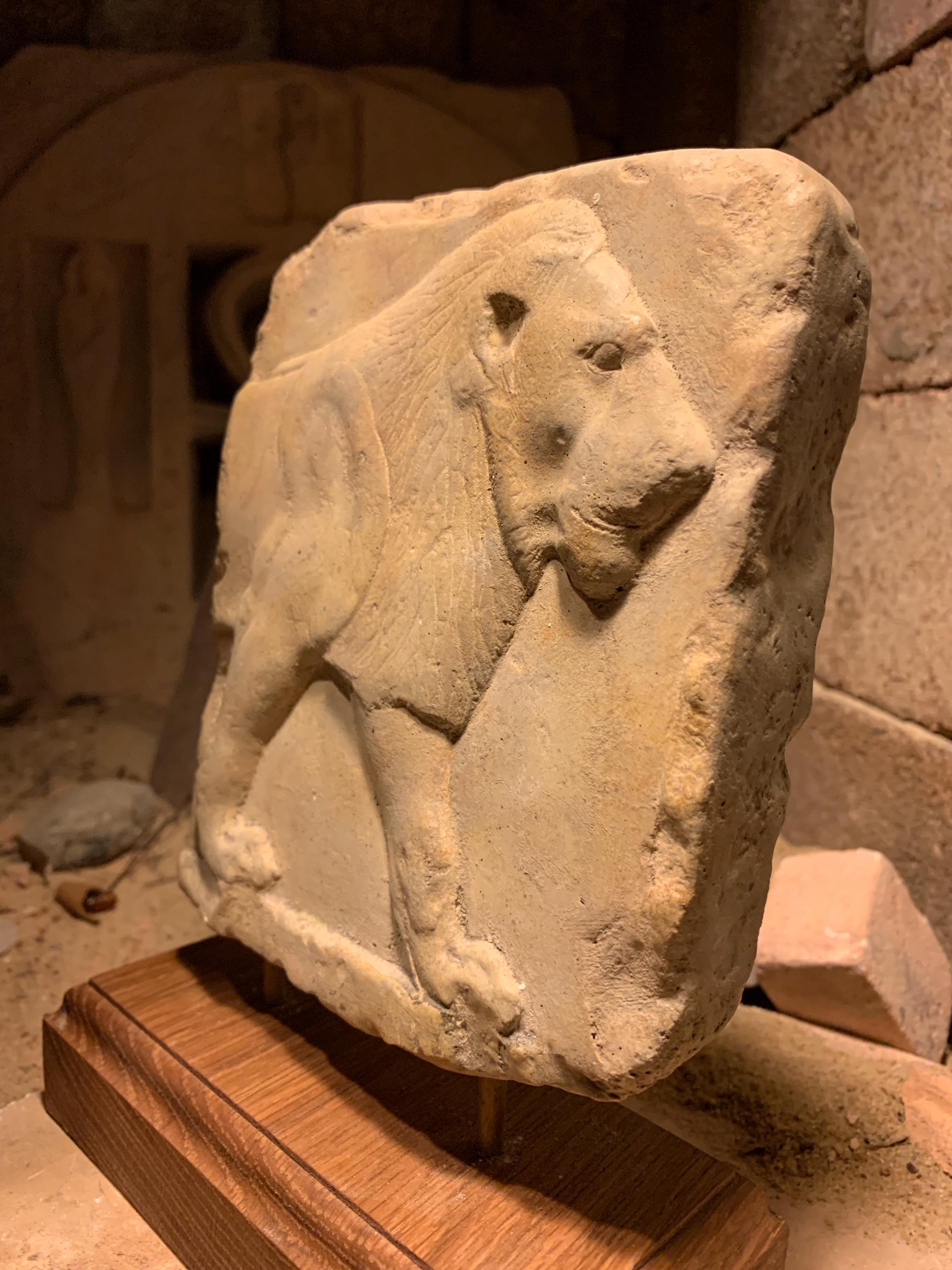
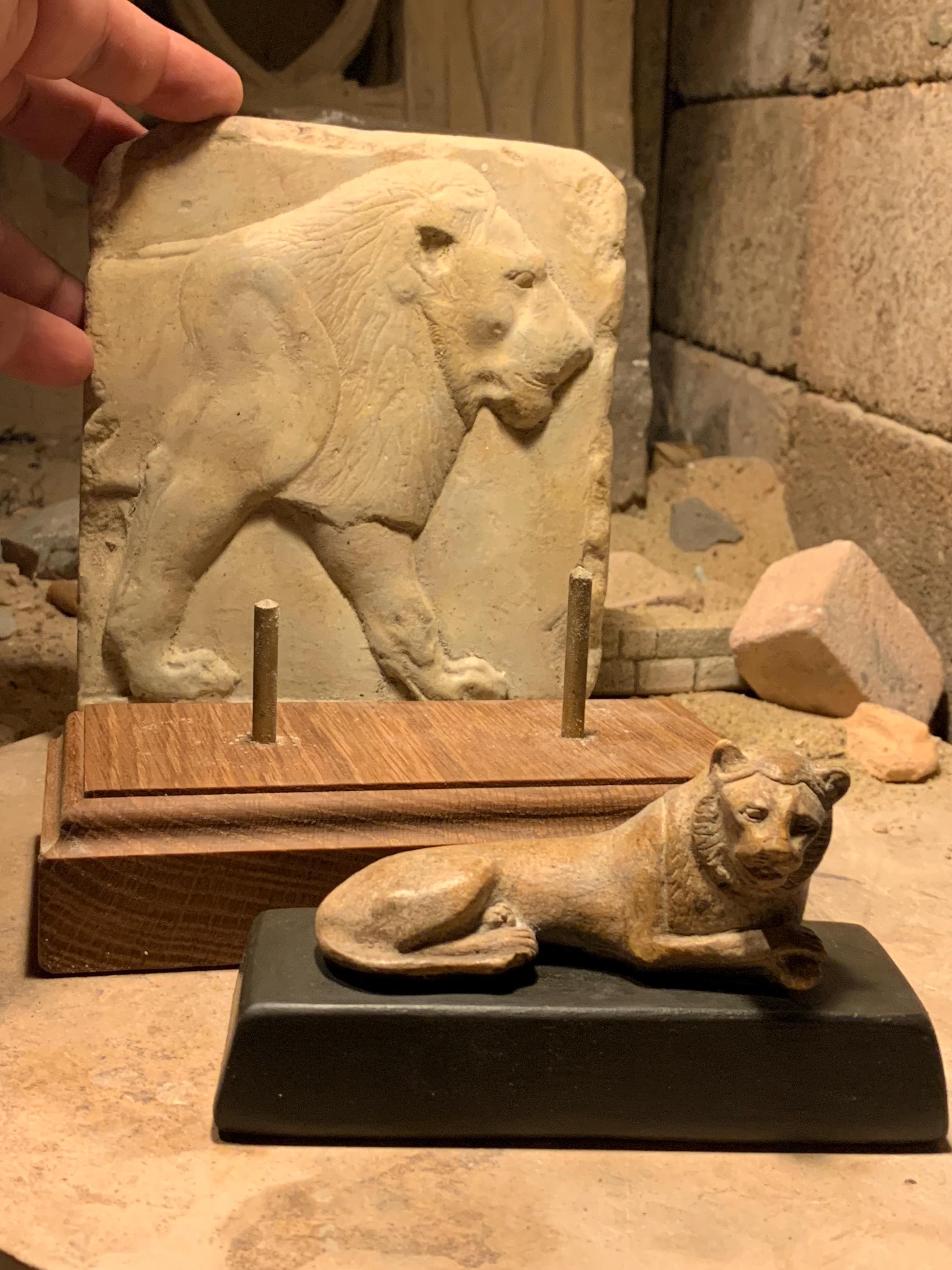
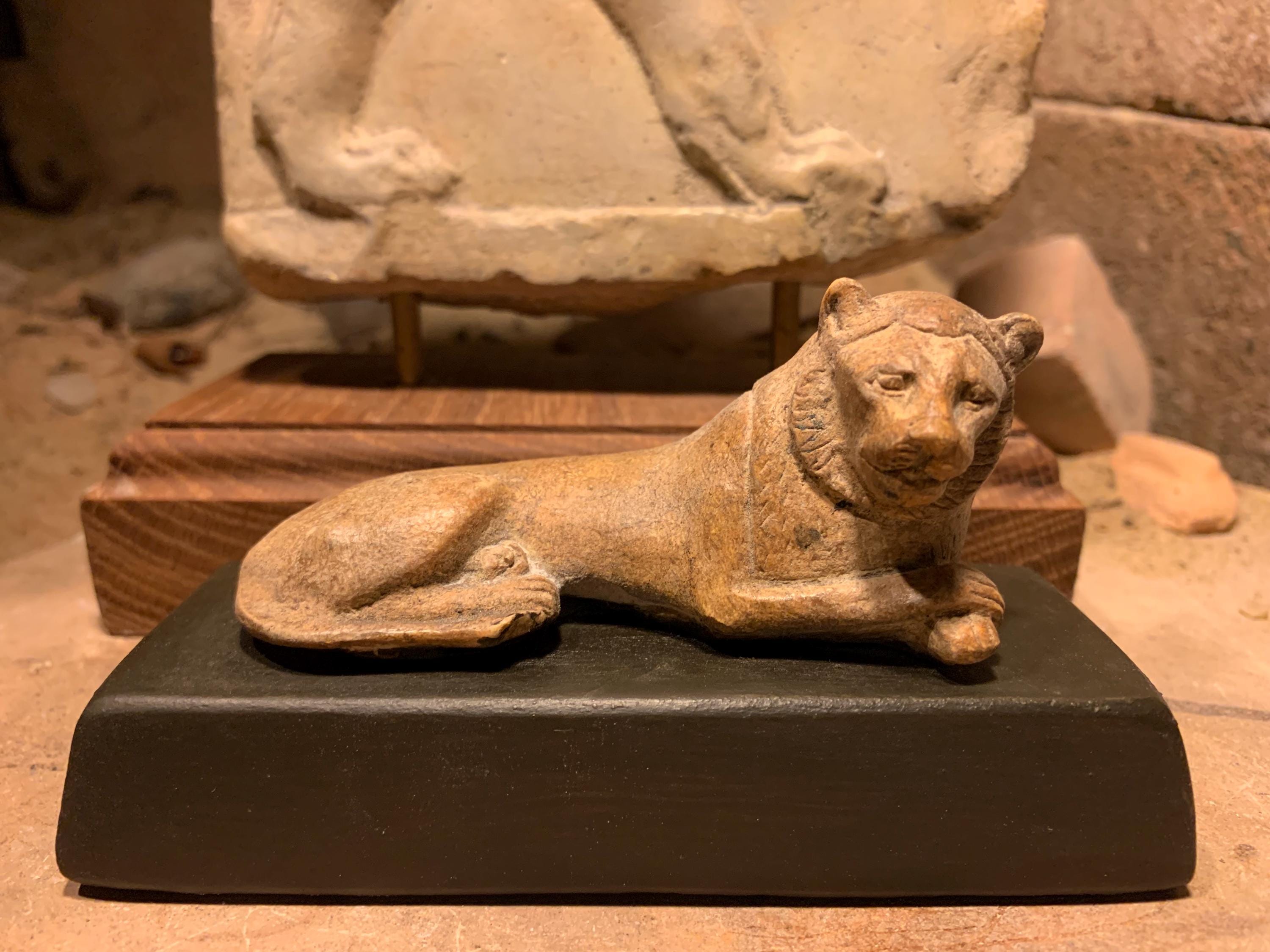
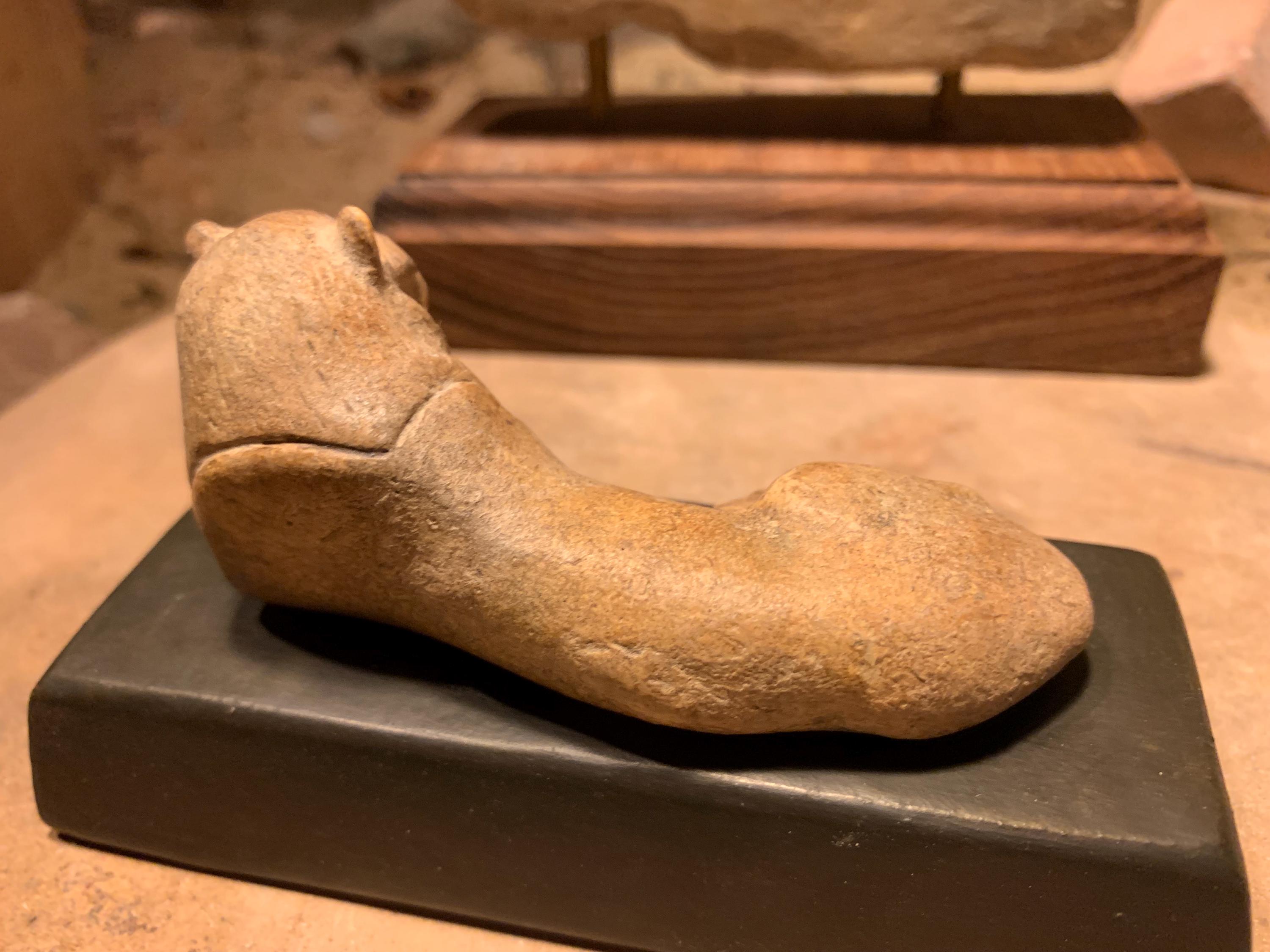
On offer here for the very first time is a delightful set celebrating the lion in Egyptian art. Included in the set are 2 replicas of actual ancient artefacts - a reclining Egyptian lion statuette and rarest of all, a double sided Ptolemaic sculptor's model of a striding lion. The reverse of this small slab features a sunken carving of a lotus column used for moulding temple or furniture inlays of clay or faience.
Made of a limestone and quartzite composition stone both pieces have been given aged patinas. The reclining Egyptian lion has been mounted on a polished felt based stand and the striding lion has been mounted on a beautiful timber stand and can be easily removed for close, hand held inspection.
Dimensions :-
Reclining lion - total height including stand - 6 cm / 2-3/8 inches
Length - 10.7 cm / 4-1/4 inches
Width - 4.2 cm / 1-3/4 inches
The reclining lion
This small statue has a finely modelled form and would suggest it was made in a royal workshop. Of an ancient type that faces sidewards with paw over paw, the lion is in a pose of alert relaxation.
King Tutankhamun was responsible for completing some very large versions of these statues on behalf of his Grandfather Amenhotep III.
Dimensions of Striding lion relief carving excluding stand :-
Height - 15.5 cm / 6 -1/2 inches
Width - 13.5 cm / 5 - 3/8 inches
Depth - 2.5 cm / 1 inch
(Total height with stand 21.5 cm / 8-1/4 inches
This extraordinary and rare replica belongs to a category of artefact that is known today by the title of a sculptor's model. These were created throughout Egyptian history but those from the Ptolemaic period (305 - 30 B.C.E) are often miniature masterpieces. They were used by master sculptors to teach up and coming ancient artists how to improve the carvers art.
It shows a striding lion with incised details of the mane and a soft rendering of the body in raised relief.
In addition to this carving the reverse side has something special to see.
A deeply incised lotus column has been fashioned to completion to serve as a mold for either faience or clay inlays. Multiple portions of viscous faience paste or pressed clay would have been placed in the mould then allowed to harden as the porous stone sucked the moisture out of the mixture. This would leave a firm, but delicate lotus column that would have been removed and fired in a kiln to achieve greater strength and permanence. Such inlays were profusely used in furniture or even temple wall and column details.
Shipping from Australia
Processing time
5-7 business days
Estimated shipping times
- North America : 1 - 3 weeks
- Europe : 1 - 3 weeks
- Australia, New Zealand and Oceania : 1 - 2 weeks
- Asia Pacific : 1 - 3 weeks
- Latin America and the Caribbean : 1 - 3 weeks
- North Africa and the Middle East : 1 - 3 weeks
- Sub-Saharan Africa : 1 - 3 weeks
I'll do my best to meet these shipping estimates, but can't guarantee them. Actual delivery time will depend on the shipping method you choose.
Customs and import taxes
Buyers are responsible for any customs and import taxes that may apply. I'm not responsible for delays due to customs.
Payment Options
Returns & Exchanges
Returns accepted within 14 days
Buyers are responsible for return shipping costs. If the item is not returned in its original condition, the buyer is responsible for any loss in value.
I gladly accept returns and cancellations
Request a cancellation within: 2 days of purchase
The following items can't be returned or exchanged
Because of the nature of these items, unless they arrive damaged or defective, I can't accept returns for:
- Custom or personalized orders
- Perishable products (like food or flowers)
- Digital downloads
- Intimate items (for health/hygiene reasons)
- Items on sale
Conditions of return
Buyers are responsible for return shipping costs. If the item is not returned in its original condition, the buyer is responsible for any loss in value.